
Build a record that survives a second review
Evidence should let another reviewer reproduce your reasoning, including why permission does not apply.
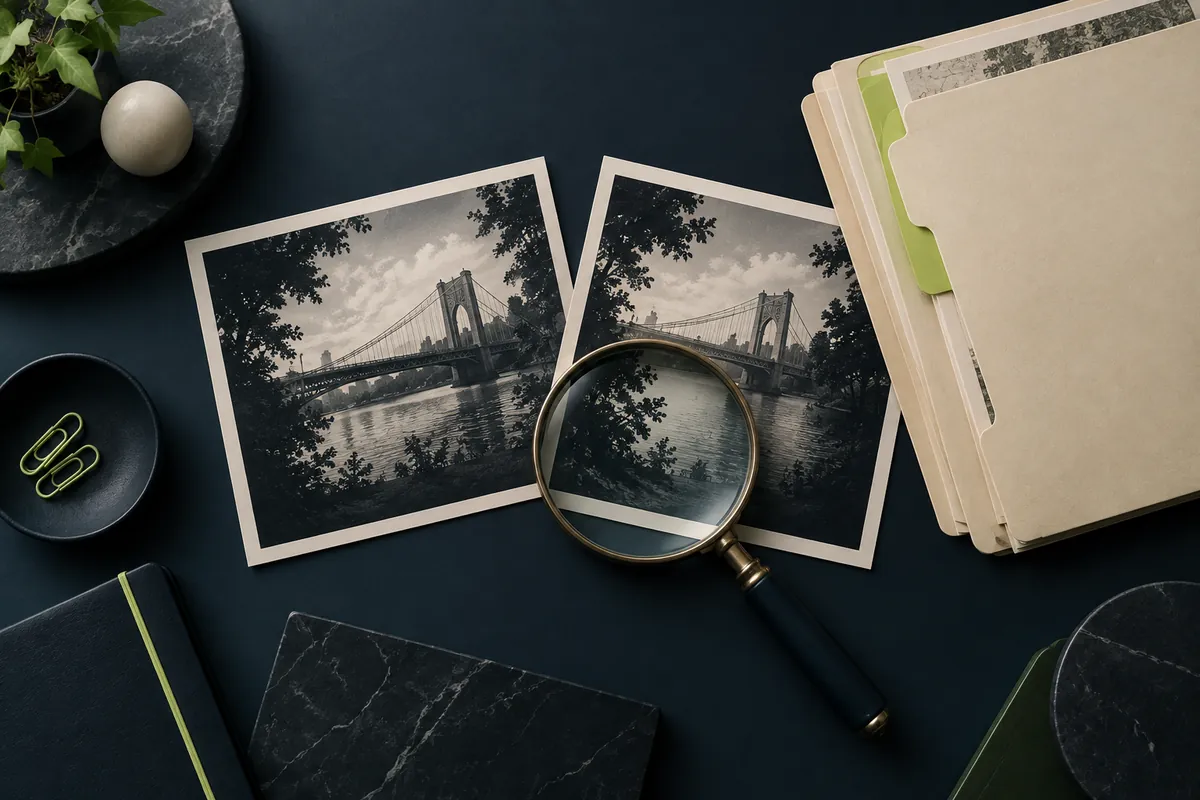
Preserve two sides of the comparison
Keep an identifiable copy of the original work and the observed material. Include title, creator, publication or distribution location, and the exact passages, images, or file characteristics at issue.
A side-by-side comparison makes a complaint easier to assess than a screenshot without explanation. For video, note timestamps; for a book, note pages or distinctive passages.
Start with the best available source, not the easiest screenshot. For a photograph, that may be the original file and publication record. For a book, it may be the manuscript, edition file, ISBN record, and authorized product page. Note why the source is reliable and who can explain it if another reviewer questions the date, authorship, or chain of custody.
The full DMCA takedown guide shows where this evidence fits in the notice workflow.
Capture context and provenance
Record the full URL, observation time in UTC, and capture method. Preserve the page surrounding the copied content, including attribution or license information that might change your assessment.
Keep original captures separate from annotated working copies. A cryptographic hash can help detect later changes to a stored file, but does not independently prove when it was captured or who authored it.
A useful capture log answers who collected the evidence, when it was collected, where it came from, and whether it was altered. Record the time zone, full URL, file name, and a checksum when your process supports one. Keep annotations in a copy so highlights, arrows, or redactions do not replace the underlying capture that a provider or adviser may need to inspect.
See how LINK-BUSTER manages a reviewed DMCA case when evidence is ready to move into notice preparation.
Build an evidence record another person can check
Good evidence lets a second reviewer see the same original, observed use, authority, and context without guessing what happened.
- Source
- Keep the original work, title, creator, and official location.
- Observation
- Save the exact URL, capture time, relevant page or timestamp, and surrounding context.
- Reasoning
- Explain the match, known permissions, authority to act, and any reason the case should stop.
Tip: preserve the untouched capture
Keep the original file separate from highlighted or annotated copies so later notes do not replace the source evidence.
Attach the authority trail
An agent should retain written authorization showing the rights holder, relevant works, scope, territories, and duration of authority. An employee should confirm which legal entity owns or controls the work. Buying a copy of a book or a software license does not by itself confer authority to enforce copyright in that work.
Write the comparison so someone unfamiliar with the work can follow it. Identify the chapter, image, sequence, code file, or timestamp at issue and describe both similarities and material differences. Avoid conclusions such as obvious theft without the supporting observation. The comparison is strongest when it separates what was seen from the legal conclusion being considered.
Confirm the signer’s scope with the copyright ownership and authority guide.
Record reasons to stop as well as reasons to act
Your checklist should include licenses, permission, public-domain status, fair use or other exceptions, and mistaken identity. Preserve a reviewer’s reasoning if a case is excluded.
An exclusion list helps prevent the next scan from turning the same licensed partner into a new complaint. Restrict access to evidence and avoid collecting unrelated personal data.
Add a permission register to the packet. Check clients, agencies, distributors, collaborators, open licences, classroom access, preview programs, and prior correspondence. Record both the source checked and the result. A negative licence check is not proof by itself, but it shows what was reviewed and prevents the same authorized use from returning as a fresh lead every week.
Our responsible enforcement standard explains why documented reasons to stop are part of a defensible record.
Example case record
For an unauthorized repost of a product photograph, record the original product page, the photographer or assignment agreement, the exact copied image URL, the surrounding page, the observation time, and a comparison of distinctive details. Note whether the other site is an authorized retailer. Only after that check should the record move toward a notice.
Before delivery, run a reproducibility check. Give the packet to a colleague who did not collect it and ask them to locate the original, open the disputed location, understand the comparison, identify the owner, and find the requested outcome. Any point they cannot reproduce becomes a concrete correction task rather than a vague instruction to add more evidence.
Software cases require a safer collection method; use the software piracy evidence guide without running unknown files.
Sources & further reading
This guide draws on the primary references below. Requirements vary by recipient and jurisdiction; check the current official process before acting.
General information, not an individualized legal opinion. For a disputed claim or litigation deadline, consult qualified counsel. Read our editorial and correction policy.